Meme coin versus blue-chip crypto
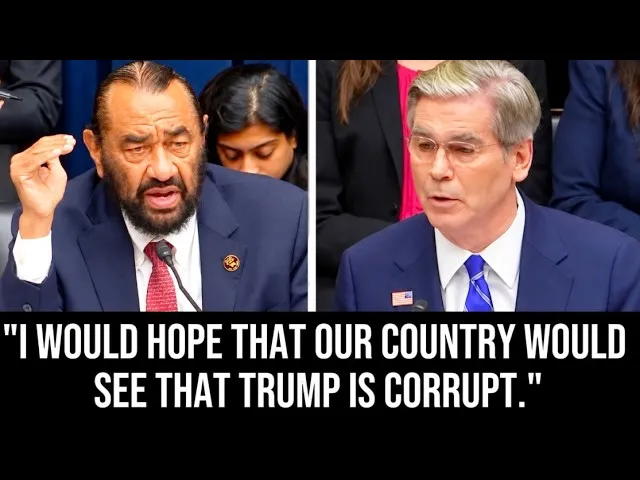
Video: WHOA: Al Green GRILLS Bessent over Trump's meme coin “scam”
Want articles like this for your own video to promote it on YouTube and Google? Order them through the Telegram bot @sat_sit_bot. The bot writes and publishes the articles itself (with your YouTube video embedded) on popular topical websites (no ads). Try it free: 50 articles on us.
· based on the channel Daniel Reed
A meme coin is worse than a blue-chip crypto asset for most buyers because it has no cash flow, no revenue and no claim on any underlying business, so its price depends entirely on someone else paying more later. The difference matters more in politics: when a sitting president launches a token while his own administration's regulators oversee the sector, the conflict of interest becomes the story, not the chart. That is exactly what Senator Al Green argued to Treasury Secretary Scott Bessent in a Senate hearing, where he called the Trump meme coin a scam.
What Al Green actually said to Bessent about the Trump meme coin
Green used his question time to put the Treasury Secretary on record about a token tied to the president's name, and the exchange is worth watching in full because the senator never let the framing slide into general crypto talk. He pressed Bessent on whether a president should be selling a speculative asset to retail buyers while the same administration writes the rules for digital assets, and he described the product as a scam rather than an investment.
Bessent's defense was that the token functions as a digital collectible, comparable to a baseball card, and that buyers know what they are getting. That answer is the heart of the disagreement: one side treats a branded token as harmless merchandise, the other treats it as a financial product sold to people who cannot assess the risk. The hearing clip is the source material for this breakdown, published by the Daniel Reed channel, and it is the clearest public exchange on the subject so far.
How a meme coin differs from Bitcoin and other large-cap crypto
The practical test is simple: ask what the token produces. Bitcoin has no company behind it either, but it has fifteen years of mining infrastructure, deep derivatives markets, regulated spot ETFs and a fixed issuance schedule that anyone can verify. A branded meme coin usually has a concentrated supply, a small number of wallets holding most of the float, and liquidity that can be pulled in minutes.
Run through the checklist before buying any meme coin:
- Supply concentration. If the top ten wallets hold a large share of the float, the price is a function of their decisions, not the market's.
- Liquidity depth. Check how much can be sold before the price drops several percent; thin pools mean you cannot exit at the quoted price.
- Who earns. Trading fees, launch allocations and insider unlocks are where the real money is made, and it is usually not made by late buyers.
- Venue quality. A token listed only on one or two small exchanges has no independent price discovery.
- Exit mechanics. If selling requires a specific platform, a specific wallet or a specific moment, that is a structural trap, not a feature.
The conflict-of-interest problem that makes political tokens different
Green's argument is not that speculation is illegal; it is that the person signing crypto policy should not be the person selling the token. A president who profits from a branded coin while his appointees decide how aggressively the sector is policed creates an incentive that no disclosure form fixes. Bessent's collectible comparison does not address that point, because baseball cards are not sold by the regulator's boss.
The second-order effect is reputational. When a political token collapses, it drags the whole asset class into the story, and legitimate projects spend the next cycle explaining why they are not that. That is the cost retail holders pay even when they never touched the token.
What viewers keep asking about meme coin losses and "greater fools"
The recurring doubt in audience reaction is not whether the token is risky, but who is left holding it. The pattern is familiar from every cycle: early buyers and insiders exit into retail demand, and the last buyers discover that the bid has disappeared. Some viewers go further and argue the real purpose is access or moving money quietly, which is speculation rather than a proven claim, but it explains why political tokens attract scrutiny that ordinary memes do not.
A fair counterpoint also shows up: plenty of buyers treat these tokens as lottery tickets with a known downside. That is a legitimate choice for someone risking money they can lose, but it is not an investment thesis, and it should never be sized like one.
How to evaluate any meme coin before you buy
Start from the assumption that the token is a zero-sum bet and work backwards. Read the token contract and the holder distribution on a block explorer, check whether the launch team's allocation is locked and for how long, and look at whether the liquidity pool is locked or controlled by a single wallet. Compare the token's fully diluted valuation against projects with actual revenue, and ask what would have to be true for the price to double.
If the answer is "more buyers arrive," you are not analyzing an asset, you are predicting a crowd. Size the position accordingly, and never borrow to hold it.
Conclusion
The Trump meme coin hearing turned a technical debate into a simple question of accountability, and Senator Al Green's exchange with Scott Bessent is the clearest version of it: a president should not sell a speculative token while his administration writes the rules for it. Bessent's collectible defense answers the wrong question, because the risk is not what the token is called but who controls the supply and who is left holding it. For anyone weighing a meme coin against established crypto, the checklist above is the whole game: supply concentration, liquidity and exit mechanics decide the outcome. The full hearing breakdown is available on the Daniel Reed channel, and it is worth watching before the next political token launches.
Key takeaways
- A meme coin has no cash flow, no revenue and no claim on any asset: its price rests entirely on the next buyer paying more.
- Senator Al Green pressed Treasury Secretary Scott Bessent over the Trump meme coin in a Senate hearing, calling it a scam.
- Bessent defended the token as a digital collectible that people buy for the same reason they buy baseball cards.
- Green's core argument: a sitting president should not profit personally from a product his own administration's regulators oversee.
- The same test applies to any meme coin: check who holds the supply, who controls the liquidity and who profits when retail buyers exit.
Source: WHOA: Al Green GRILLS Bessent over Trump's meme coin “scam” · Markdown version
Questions & answers
Is the Trump meme coin legally a scam?
No court or regulator has ruled it a scam, and calling it one is a political characterization rather than a legal finding. What is documented is the structure: a branded token with concentrated supply sold to retail buyers while the issuing side controls the rules. Senator Al Green used the word in a Senate hearing; Treasury Secretary Scott Bessent described the token as a digital collectible.
What is the difference between a Ponzi scheme and a meme coin?
A Ponzi scheme promises returns and pays old investors with new money, which is fraud. A meme coin promises nothing and has no cash flow, so its price depends purely on demand. The overlap people point to is that both need a continuous stream of new buyers, but only the Ponzi involves misrepresentation of where the money comes from.
Can a president legally launch a crypto token?
There is no specific statute banning a sitting president from issuing a digital token, which is precisely the gap critics highlight. Existing rules cover securities fraud and disclosure, not the personal profit of an officeholder from a branded asset. That is why the debate in the Senate hearing focused on ethics and conflict of interest rather than a clear legal violation.
How much money do ordinary buyers lose on meme coins?
Losses vary by token, but the mechanism is consistent: insiders and early wallets sell into retail demand, and late buyers are left with an asset whose liquidity has thinned. Before buying, check the holder distribution and whether the liquidity pool is locked. If most of the supply sits in a few wallets, the downside is structural, not bad luck.